
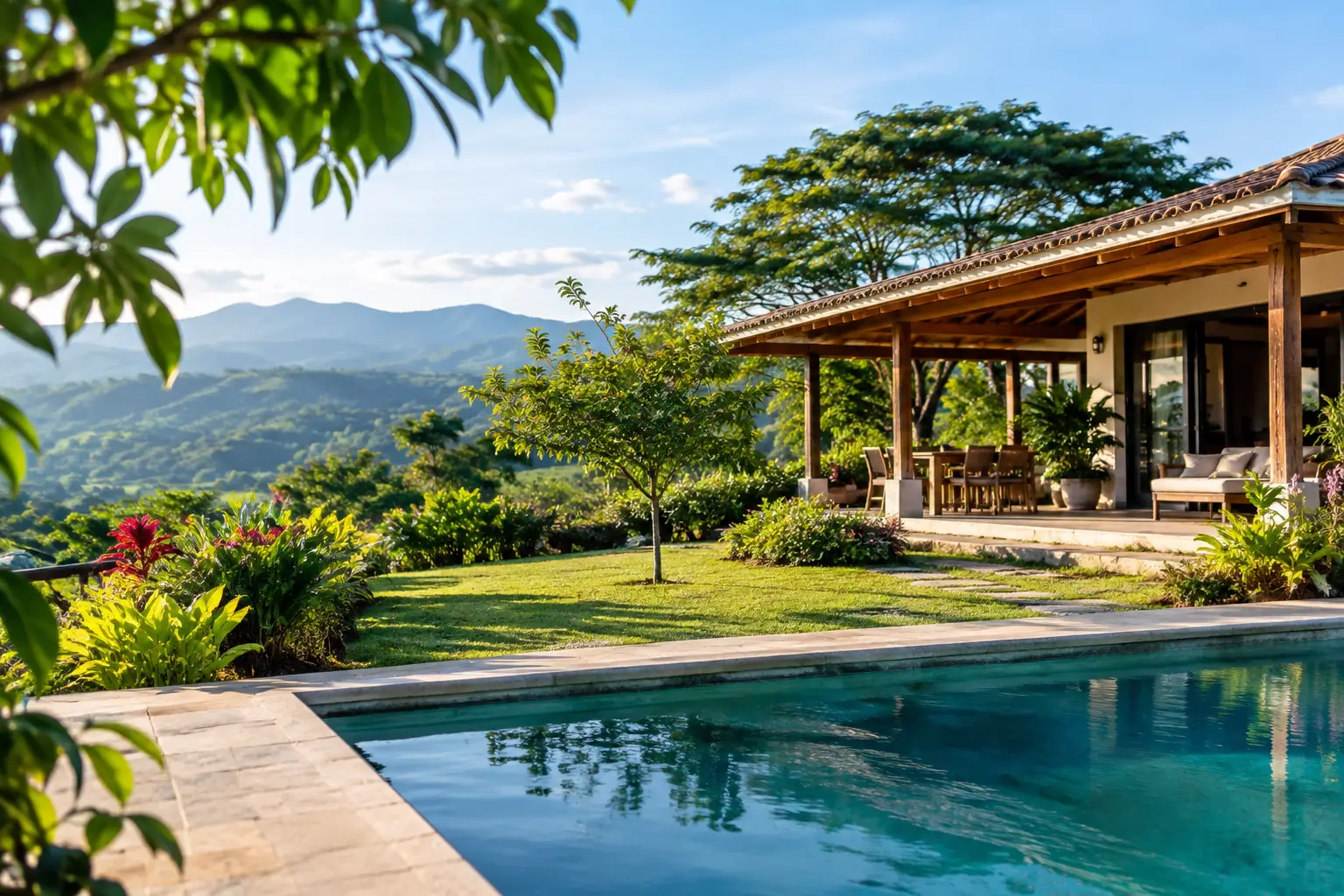
A useful El Ciruelo eco finca example is not a glossy rendering of a tropical homestead. It is a property that can support the life and business model a buyer has in mind after the dry season, a heavy rain, a title review, and a realistic construction budget. In this part of the Azuero Peninsula, the appeal is easy to understand: rolling countryside, a quieter pace than the more built-up coastal areas, and proximity to beaches, Pedasi services, and outdoor life. The harder question is whether a particular parcel can actually carry the plan.
For an international buyer, an eco finca may mean a private home with fruit trees and solar power. For another, it may mean a small-scale hospitality project, regenerative agriculture, horses, or a few rental casitas. Those are very different uses, and they place different demands on access, water, terrain, permitting, and ownership structure.
An El Ciruelo Eco Finca Example
Consider a hypothetical buyer looking for 8 to 15 acres in or around El Ciruelo. They want a primary residence, a guest casita for visiting family, a modest food garden, and enough privacy to feel removed from the beach-town traffic. They are not looking to operate a commercial farm, but they want the option to produce fruit, keep a few animals, and potentially rent the guest space later.
That buyer should not begin by asking whether the land is “eco.” The better starting point is what the land naturally offers and what must be added at cost. A finca that looks green during the rainy season may have very different water conditions from January through April. A beautiful elevated site can offer breezes and views, while also requiring a more expensive driveway, drainage work, retaining measures, or a more carefully engineered septic system.
The most promising version of this example might include legal road access, a defined titled boundary, usable building areas outside drainage paths, and a water strategy that works in the dry months. It does not need to be completely flat. In fact, gentle variation in the land can create privacy, better views, and useful planting zones. But the buyer needs enough practical ground for the home, parking, wastewater treatment, storage, and the kind of garden or orchard they envision.
A finca is not automatically more valuable because it is larger. A smaller titled parcel with reliable access, a good well or documented water source, and straightforward buildable ground can be more useful than a much larger tract where the best areas are difficult to reach or where water remains uncertain.
Start With the Physical Reality
El Ciruelo is rural, and that is part of its appeal. It also means site conditions matter more than they do in a subdivision with finished roads and installed utilities. A buyer should visit a property with enough time to walk it, not just stand at the proposed homesite. The route from the public road to the parcel deserves as much attention as the view from the parcel itself.
Ask who uses and maintains the access road. Is the route passable in sustained rain? Is there a recorded easement if the property does not front a public road? Can construction trucks reasonably enter, or would materials need to be transferred from a nearby point? These questions are not glamorous, but they can shape both construction timing and long-term enjoyment.
Topography should be evaluated with a practical eye. Walkable land is not necessarily buildable land, and a level-looking clearing may have drainage issues when the rains arrive. Look for natural water flow, low spots, erosion, mature trees worth retaining, and the actual location of any seasonal creek or drainage channel. If the plan includes rental units or an event space, consider vehicle turning, emergency access, noise, and the distance between guest areas and the owner’s home.
Electricity is another place where assumptions can become expensive. Power may be nearby, but the cost and feasibility of extending service depend on the specific location. Off-grid or hybrid solar can be an excellent choice for some buyers, especially where energy needs are planned carefully. It is not a substitute for understanding load requirements, battery replacement cycles, backup needs, and the power demands of pumps, air conditioning, refrigeration, or a pool.
Water Is the Finca’s Operating System
An eco finca plan succeeds or fails on water management. Rainwater collection can be valuable, particularly for irrigation and backup supply, but its usefulness depends on roof area, storage capacity, rainfall patterns, filtration, and household demand. It should be designed as a system, not treated as a lifestyle accessory.
If a parcel has a well, ask for documentation of its condition, pump performance, depth, and any available history of dry-season production. If water comes from a community system or another source, clarify the legal and practical basis for that service. A seller’s statement that there is “water nearby” is not enough for a buyer planning to build a home or operate guest accommodations.
Water quality also matters. A source can be adequate in volume but still require treatment for drinking. Wastewater needs equal attention. The land must accommodate an appropriate septic solution without compromising wells, homesites, or future planting areas. This is especially relevant on sloped ground, where poor drainage planning can create problems long after the first construction phase is complete.
For the hypothetical buyer, the right question is not whether they can grow everything. A realistic question is what can be grown reliably with the available water, labor, soil, and maintenance budget. Fruit trees, native landscaping, a kitchen garden, and small livestock can all fit a thoughtful finca plan. Intensive agriculture may require a far greater commitment than a buyer expects, particularly during the dry season.
Title Comes Before the Dream
In Panama, buyers must distinguish clearly between titled property, rights of possession often called ROP, and concession land. These forms of tenure are not interchangeable. A buyer considering an eco finca as a residence, investment, or future hospitality asset should understand exactly what is being acquired and what rights can be legally transferred.
For a titled property, due diligence should include verification of the registered owner, the parcel’s boundaries and area, encumbrances, and the chain of authority for anyone signing on behalf of the seller. A survey may reveal that fences, roads, or neighboring uses do not align neatly with the registered plan. That is not a reason to abandon every opportunity, but it is a reason to resolve discrepancies before capital changes hands.
If a property is offered as ROP, the analysis changes substantially. The evidence supporting possession, the history of occupation, the risk profile, and the buyer’s intended use all need careful legal review. Buyers should not assume that a lower price makes an informal tenure position a bargain. The right structure depends on the parcel and the buyer’s tolerance for complexity.
An eco project can also trigger additional questions about permits, commercial activity, employee housing, water use, and subdivision potential. A private home with a garden is a different proposition from multiple guest cabins or a small retreat. Before treating future expansion as part of the value, confirm what is realistically permitted and what approvals may be required.
Build in Phases, Not Assumptions
For many overseas buyers, a phased approach is the sensible version of an El Ciruelo finca plan. Secure the land only after proper due diligence, then establish access, drainage, water storage, basic utilities, and a modest first structure before committing to the full vision. This creates time to understand the property through a wet season and a dry season.
Phasing can protect the budget, but it is not always cheaper. Mobilizing contractors repeatedly, changing plans midstream, or installing temporary systems that later need replacement can add cost. The advantage is better decision-making. Buyers learn where shade falls, how wind moves through the property, where water collects, and how much maintenance the land actually requires.
A good site plan also preserves options. Place the main home where it has privacy and dependable access. Reserve the most practical secondary building area for a future casita or caretaker space. Keep room for water tanks, solar equipment, septic infrastructure, and service access rather than hiding these necessities after the design is finished.
For buyers who live abroad part of the year, management is part of the finca equation. Gardens, pumps, gates, drainage ditches, and roofs do not wait for a seasonal visit. A local caretaker or property manager may be essential, and that operating cost should be considered before buying more land than the owner can comfortably maintain.
The right finca in El Ciruelo does not need to arrive fully formed. It needs a defensible title position, workable access, a credible water plan, and land that supports your intended use without forcing the property to become something it is not. That is where a beautiful rural purchase becomes a place you can enjoy, improve, and hold with confidence.