
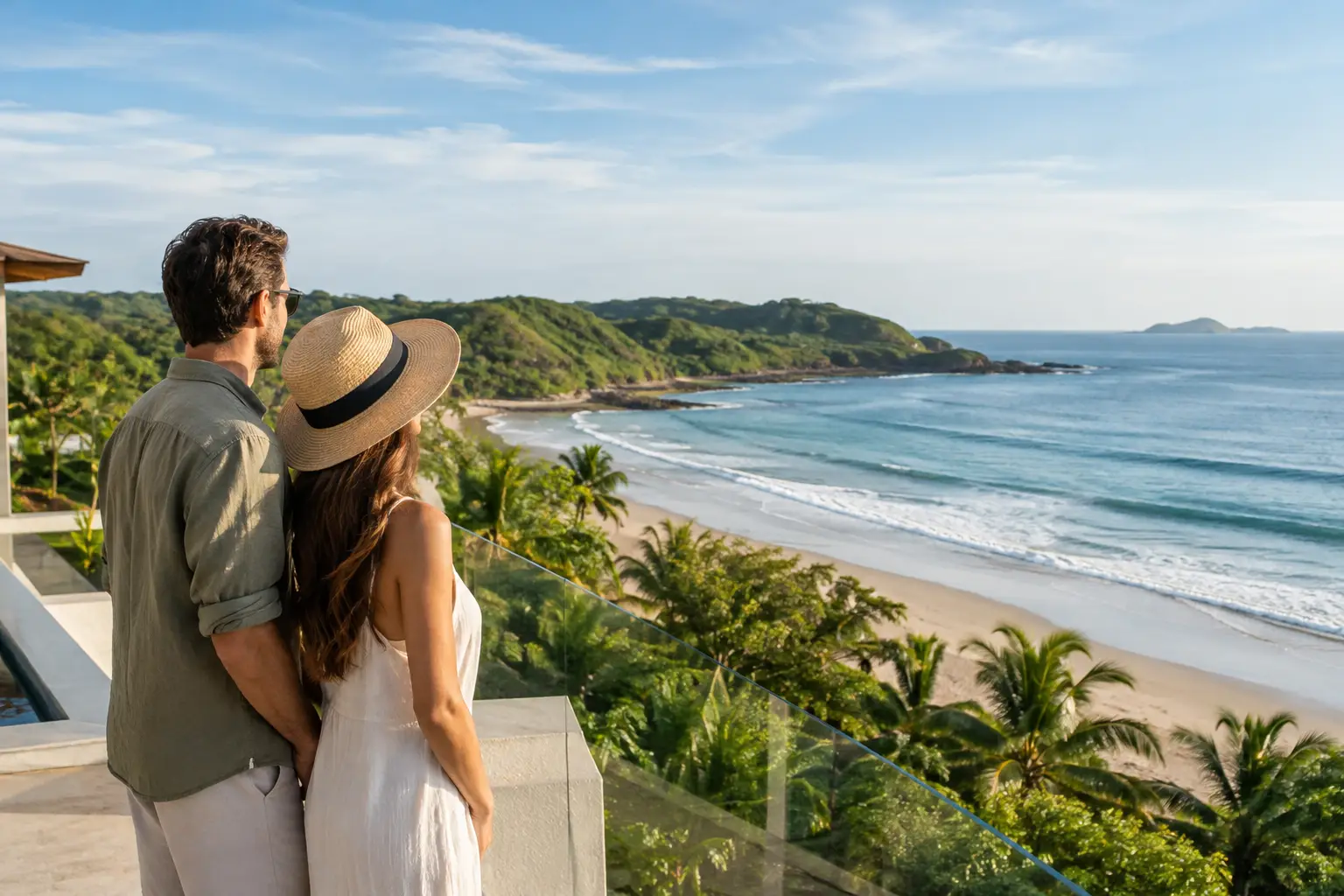
Playa Venao for expats can be an exceptional fit, but it is not a generic beach-town move. The draw is clear: a surf-oriented coastal setting, jungle-covered hills, an international mix of residents, and a more active rhythm than many parts of the Azuero Peninsula. The practical question is whether the specific property, access route, ownership structure, and day-to-day setting work for the life or investment you intend to build.
For some buyers, Playa Venao is the place to live full-time while working remotely. For others, it is a second home with rental potential or a land position held for a future build. Those are different decisions. The right purchase starts by separating the appeal of the area from the facts of an individual parcel or home.
What Life in Playa Venao Actually Feels Like
Playa Venao has an energy that distinguishes it from quieter Azuero communities. Surf breaks, beach clubs, restaurants, yoga studios, coworking options, and boutique accommodations create a social center that appeals to younger remote professionals, entrepreneurs, and active retirees. English is commonly heard, though daily life still runs more smoothly when you can communicate at least basic Spanish.
That activity is a benefit if you want community close at hand. It can be a trade-off if your ideal coastal property means complete quiet. A home near the beach or central road may place you close to dining and surfing, but it may also experience seasonal traffic, music, construction, and visitors. A hill property can offer privacy, views, and cooler breezes, while asking more of you in road access, vehicle choice, water storage, and storm-season planning.
The dry season and green season also feel markedly different. In the dry months, dust, heat, and water demand deserve attention. During the rainy months, the landscape becomes lush, but roads, drainage, slope stability, and creek crossings need to perform as advertised. A property visit in only one season rarely tells the complete story.
Playa Venao for Expats Means Choosing a Micro-Location
Playa Venao is not one uniform property market. A listing described as being in Playa Venao may sit near the beach, up a steep inland road, or in a nearby rural pocket with a very different drive time and service profile. Asking for a pin on a map is useful, but it is only the beginning.
Drive the final approach yourself, ideally in the vehicle you expect to own or rent. Ask whether the road is public or private, who maintains it, and whether there are formal easements recorded for access. A beautiful lot does not compensate for an uncertain legal route to it. If the access crosses neighboring land, the terms should be documented rather than assumed from local custom.
Topography affects far more than the view. On sloped land, a buyer should understand the buildable area, retaining requirements, drainage path, soil conditions, and realistic construction access. A dramatic ocean view may require a more complex foundation, a longer utility run, and an ongoing road-maintenance budget. Flat land can be simpler to build on, but may be more exposed to heat, road noise, or water flow during heavy rain.
Beach proximity requires its own review. Confirm the actual distance and route to the beach, rather than relying on a broad description such as “walking distance.” Near-coastal parcels can also involve setbacks, environmental considerations, salt exposure, and more intensive corrosion maintenance for metal, air-conditioning equipment, windows, and vehicles.
Verify the Ownership Before You Value the View
Foreigners can own titled property in Panama, generally with the same ownership rights as Panamanian citizens. That does not mean every coastal property offered for sale has the same type of tenure or carries the same level of risk.
The first distinction is between titled land, Rights of Possession land, often called ROP, and concession-related property. Titled land has a registered title and should be independently checked at the Public Registry, along with the seller’s authority to sell, liens, boundaries, and any recorded restrictions. This is usually the clearest ownership structure for an overseas buyer, but title still needs verification parcel by parcel.
ROP refers to possession rights rather than registered private title. It can be common in rural Panama, but it requires a different level of legal and practical investigation. Buyers need clarity on the chain of possession, competing claims, boundaries, access, and whether a title process is possible or appropriate. It should never be treated as equivalent to titled land simply because a property has been occupied for many years.
Concession arrangements may apply in certain coastal zones and can carry rules, approvals, renewal terms, and transfer limitations that differ from private ownership. The structure matters to financing, resale, development plans, and long-term control. Before committing funds, have an independent Panamanian attorney review the tenure type and the documents supporting it.
A seller’s story, a neighbor’s assurance, or an old survey is not a substitute for this work. The most expensive error in a beach market is often not paying too much for a good property. It is paying for a property whose rights, limits, or access were never fully established.
Utilities Are a Site Investigation, Not a Checkbox
A listing can say water and electricity are available while leaving important questions unanswered. Is water supplied by a local aqueduct, a private well, a shared system, or delivery? What is the dry-season reliability? Is there adequate pressure for the intended house, guest casita, pool, or landscaping? If a well is proposed, assess groundwater prospects and the cost of drilling rather than treating water as guaranteed.
Electricity may be at the property line, down the road, or technically available at a cost that changes the economics of a build. Ask for the distance to the connection point, the likely extension requirements, and whether the existing service is adequate for air conditioning and future expansion. Solar can be a smart complement, especially for backup power, but it does not remove the need to design a reliable system.
Internet should be tested at the exact site. Coverage maps are useful, but terrain can change mobile signal dramatically within a short distance. If remote work is central to your move, confirm available providers, actual speeds, backup options, and power resilience. Do the same for septic: establish whether the soil, slope, and lot layout can support an appropriate system.
Buying for Rentals Requires a Separate Lens
Playa Venao’s visitor activity makes short-term rentals part of many buyers’ thinking. It is reasonable to consider, but rental income should not be used to justify skipping due diligence or stretching beyond your cash position. Occupancy, rates, operating expenses, and guest demand vary by season, property condition, competition, and management quality.
A rental property also needs operational answers. Who handles check-ins, cleaning, pool care, repairs, linen turnover, guest communication, and emergency calls when you are abroad? How will you budget for humidity, salt air, landscaping, road wear, and replacement of appliances or equipment? A property that photographs beautifully can still be difficult to operate profitably if it has unreliable access or a fragile utility setup.
Confirm local requirements that may affect short-term rentals, business operations, staffing, and permits before making assumptions about use. If you plan to build multiple units, an eco-lodge, or a commercial component, the review should expand to zoning, environmental considerations, wastewater capacity, parking, and construction permissions.
Plan the Transaction Around Reality, Not Urgency
Many international buyers use cash because conventional financing can be less straightforward for nonresidents and because local bank requirements can be demanding. Whatever your funding source, preserve enough liquidity for legal review, closing costs, survey work where needed, site preparation, furnishing, and the inevitable first-year repairs or improvements.
Do not confuse a reservation payment with a completed investigation. A well-drafted purchase agreement should give your legal and technical review the time it needs, define what happens to deposits under stated conditions, and identify the documents the seller must provide. Title search, tax status, corporate records when a company owns the property, boundary review, and physical inspection should all have a place in the process.
Residency is also a separate matter from buying real estate. Property ownership may be relevant to certain immigration pathways, depending on current rules and investment thresholds, but a purchase does not automatically grant residency. Obtain current immigration advice before structuring a purchase around a residency expectation.
Love Your Land Panama works in the Azuero coast with a simple premise: the property worth buying is the one that holds up after the map pin, documents, roads, water, and site conditions have been tested. Spend time in Playa Venao, drive beyond the obvious roads, and let the practical details decide whether the place you love is also the property you can own with confidence.