
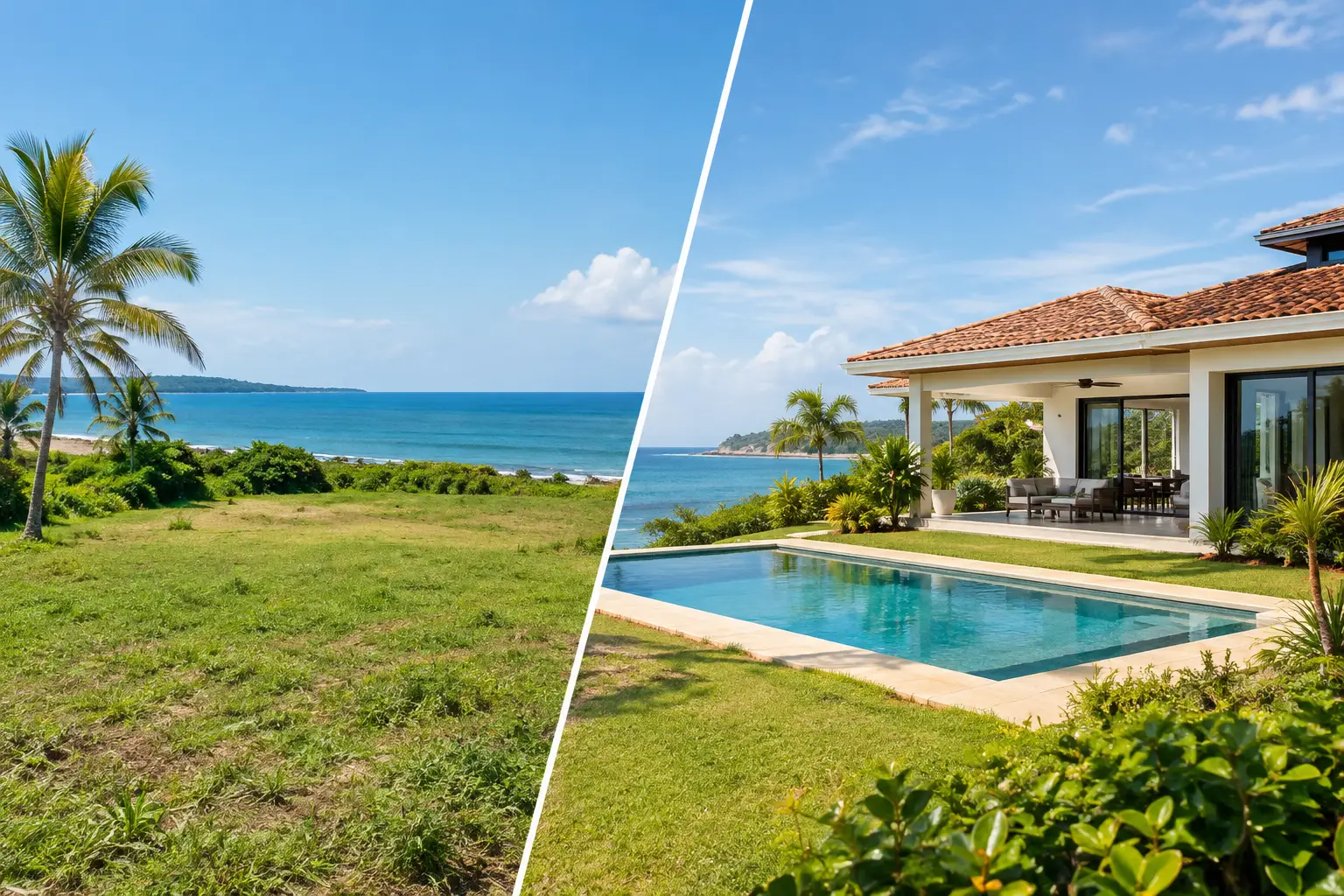
A finished villa can put you on the beach faster. A coastal lot can give you more control over what that beach life becomes. The better choice is not universal, especially in the Azuero Peninsula, where access, water, title, terrain, and the reality of managing a property from abroad can matter as much as the view. When weighing a coastal lot versus villa, start with the lifestyle and investment job you need the property to do in its first three to five years.
A buyer planning to spend several months a year in Panama may value a turnkey home and immediate usability. Someone with a clear architectural vision, patience, and a longer holding period may see more value in land. Both can be sensible purchases in Playa Venao, Cañas, El Ciruelo, or near Pedasí. Both can also become expensive mistakes if the physical site and ownership rights are assumed rather than verified.
Coastal Lot Versus Villa: Start With Your Timeline
A villa is usually the more direct route to using the property. You can inspect the existing structure, test the drive from town, assess the neighborhood at different times of day, and understand what you are buying with far fewer unknowns than a future build. If the home is furnished and functional, it may also be easier to establish a caretaker, begin personal use, or consider rental management after the purchase closes.
That convenience comes with a trade-off. You are accepting decisions already made by someone else: the orientation of the house, the quality of drainage, the room layout, the construction methods, and possibly the age of the roof, pool equipment, septic system, air-conditioning units, and retaining walls. A beautiful villa can still need meaningful capital soon after closing. Salt air, tropical rain, humidity, and unpaved-road access are not minor operating details on the Azuero coast.
A coastal lot asks more of the buyer upfront. You need to define a budget for design, permits, site preparation, construction, furnishings, landscaping, utility connections, and contingency. You will also need time. Even a straightforward home can take longer than expected when materials, labor, weather, approvals, or access conditions shift.
In return, land lets you position the house for prevailing breezes, shade, privacy, views, and the way you actually live. It can be a strong fit for buyers who want a modest personal home, a carefully planned rental, or a multistage project that begins with infrastructure and a small casita before a main residence.
The Site Matters More Than the Listing Description
On a coastal lot, the building envelope is the asset. A stated acreage figure or ocean-view label does not tell you whether a house can be placed where you expect. Walk the land with a practical eye. Is there a usable, relatively level area, or will the site require significant cutting, filling, retaining, and drainage work? Does the access road remain passable after sustained rain? Is the view protected by the lot’s topography, or could a neighboring build interrupt it?
Water deserves early attention. Ask how nearby homes obtain water and whether the property has a reliable source, a legal connection path, storage requirements, or a need for a well. Electricity also requires specifics. A line visible from the road is not the same as a confirmed connection with a known route and cost. Internet availability, cellular service, septic suitability, and stormwater runoff belong in the same conversation.
These checks matter for villas too. A finished home may mask site issues until the first heavy rainy season. Look for evidence of standing water, erosion, settlement, stained retaining walls, damp interior corners, and drainage that directs runoff toward the house. Visit after rain if possible, or speak with people who have experienced the property through a full wet season.
In Playa Venao, proximity to surf, restaurants, and activity may be a priority, but traffic patterns and noise can vary greatly by micro-location. Cañas and El Ciruelo can offer more space and privacy, yet road conditions and service distances deserve closer scrutiny. Around Pedasí, a buyer may prefer the convenience of town while still wanting a quiet coastal setting. The best location depends on how often you will be there, how independently you want to live, and who will care for the property when you are away.
Title Is Not a Detail to Leave for Later
For international buyers, Panama can offer a straightforward ownership structure when the property has proper titled ownership and the transaction is prepared correctly. But coastal property comes with tenure questions that must be addressed parcel by parcel. Do not treat the words “beachfront,” “oceanfront,” or “near the beach” as evidence of ownership rights.
A coastal lot or villa may be titled, held through Rights of Possession, commonly called ROP, or affected by concession considerations. These categories do not carry the same rights, transfer process, financing options, or risk profile. Their suitability depends on the exact property, the documentation available, and your tolerance for uncertainty. A buyer should have qualified local legal counsel review the ownership chain, registry information where applicable, surveys, boundaries, access rights, easements, tax status, and any restrictions before money changes hands.
The structure on a villa property also needs review. Confirm that the building sits within the parcel being sold, that boundaries match the property presented, and that access is legally supported rather than merely tolerated by a neighbor. If a home relies on a shared road, shared well, shared gate, or informal maintenance arrangement, clarify who pays, who controls it, and what happens if relationships change.
With land, boundaries should not be guessed from fence lines, old markers, or an agent’s pointing hand. A current survey and physical verification can prevent a costly surprise after purchase. This is especially relevant in rural coastal areas, where the landscape may be clear but the paperwork and practical access require careful interpretation.
Compare the Real Cost, Not Just the Purchase Price
A villa’s asking price is more visible, but it is not the full cost of ownership. Budget for inspection findings, repairs, furnishing gaps, insurance, pool and landscaping care, utilities, security, and a reliable local manager if you live abroad. If rental income is part of the plan, add the cost of booking operations, cleaning, guest communication, maintenance response, and periods when the home is vacant.
Land can look less expensive because the build costs are deferred. They are not eliminated. Before making an offer, develop a preliminary project budget with enough detail to expose the big variables: road work, grading, retaining, water, power, septic, permits, professional fees, construction, and contingency. A steep view lot may be compelling precisely because it is difficult to build on. That difficulty should be priced into your decision.
Asking prices also need context. In a market without a centralized MLS, public inventory is incomplete and comparable sales information may be limited. A listing price is an owner’s asking position, not an appraisal and not proof of future value. Love Your Land Panama evaluates active opportunities through direct market knowledge and property-specific due diligence, rather than broad claims about appreciation or rental returns that cannot be supported across this localized market.
Which Buyer Usually Benefits From Each?
A villa is often the better fit if you want to use the property soon, prefer predictable scope, are buying from overseas, or want to test the area before taking on a construction project. It can also suit a buyer who values established landscaping, a known neighborhood, and the ability to see the finished experience before committing.
A coastal lot may suit you better if design control is central to the purchase, you can hold patiently, and you are prepared to manage professionals and decisions over time. It can be particularly attractive when the parcel has clear title, dependable access, workable topography, and utilities that are available or realistically achievable. The strongest land purchases are usually not the cheapest-looking ones. They are the ones where the future home is genuinely feasible.
There is also a middle ground: buy a modest, usable home on a strong parcel and improve it gradually, or buy land near an established community while you rent locally during planning. Those paths can reduce pressure to make a rushed decision based solely on a sunset view.
Before choosing either route, spend time on the property, ask unglamorous questions, and let the answers affect the price you are willing to pay. The Azuero coast rewards buyers who stay open to its adventure while being disciplined about what the land, the house, and the ownership documents can actually support.