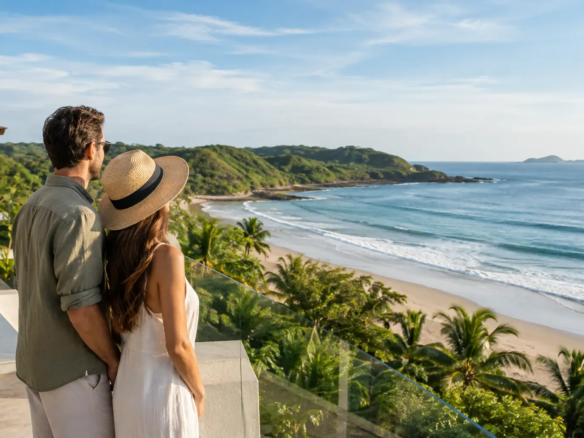
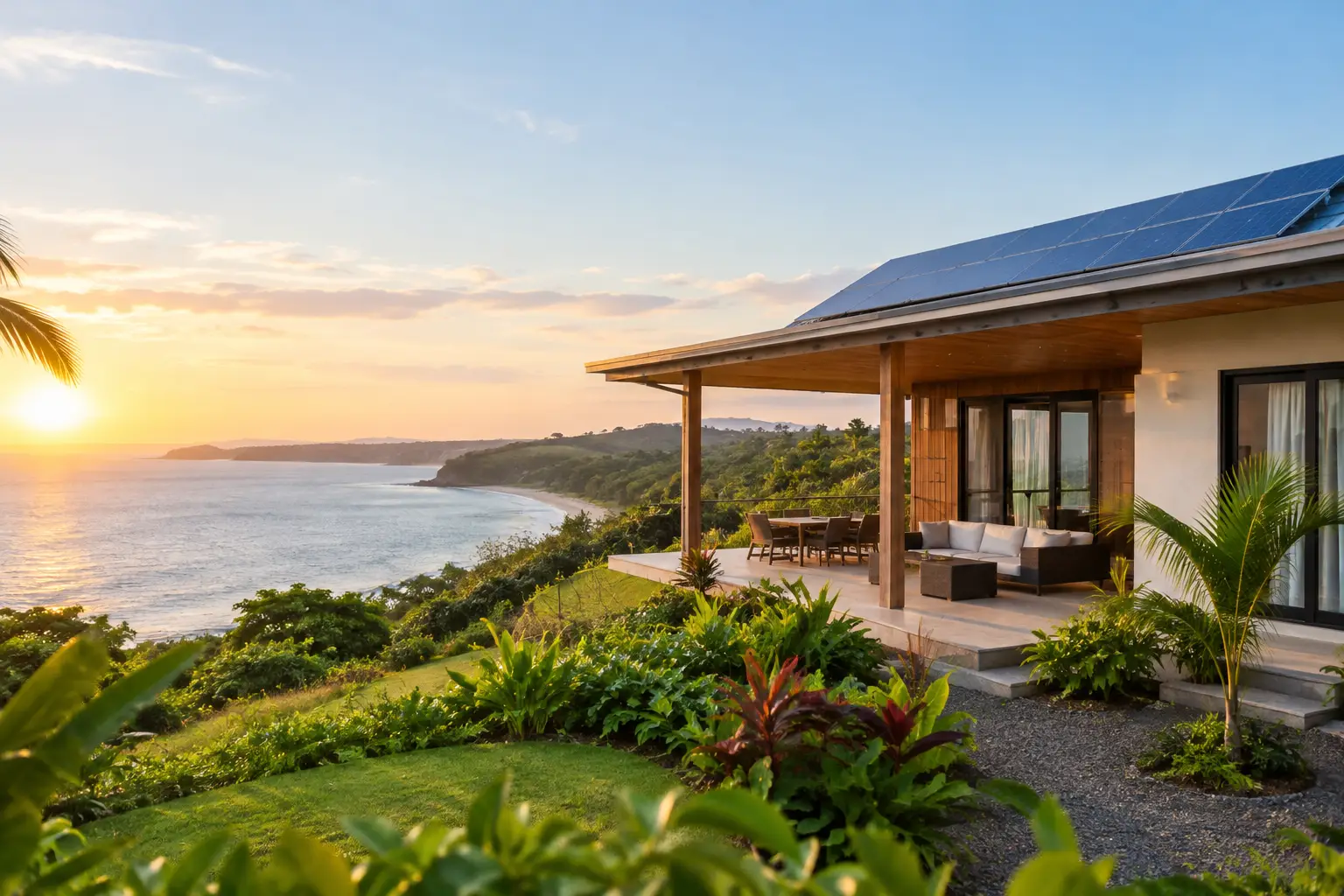
A house that looks sustainable in a rendering can become an expensive coastal problem if its water source fails, its solar equipment cannot be serviced locally, or its access road becomes unreliable during heavy rain. For buyers considering eco sustainable houses on Panama’s Azuero Peninsula, the right question is not simply whether a home has solar panels or bamboo finishes. It is whether the property works well on its actual site, through dry season, wet season, power interruptions, salt air, and everyday ownership from abroad.
On the Azuero coast, sustainability is most useful when it improves resilience, comfort, and operating simplicity. That may mean a shaded home that needs less air conditioning, a properly sized water-storage system, durable materials that tolerate humidity, or a site plan that protects drainage rather than fighting it. These decisions matter in Playa Venao, Cañas, El Ciruelo, and the Pedasí area, where conditions can change substantially from one parcel to the next.
What Eco Sustainable Houses Should Do Well
The most credible eco home is not necessarily the one with the longest features list. It is the one designed around climate, topography, available services, and the owner’s intended use. A part-time vacation home has different demands from a full-time residence, a rental villa, or a small eco-lodge.
Azuero’s tropical climate creates clear priorities. Heat, sun, seasonal rain, wind exposure, insects, humidity, and salt air all affect how a house performs. Passive design should come before mechanical solutions. A thoughtful roofline, deep overhangs, cross-ventilation, shaded outdoor living areas, and sensible window placement can reduce indoor heat before air conditioning enters the equation.
This is especially relevant on exposed coastal sites. Large west-facing glass walls may look dramatic at sunset, but they can create substantial afternoon heat gain. A home that relies on constant air conditioning may still be comfortable, but its power needs, backup requirements, and maintenance burden should be understood before purchase.
Sustainability also has a practical financial dimension. A house with lower utility dependence and fewer preventable maintenance issues can be easier to operate over time. That does not mean every green upgrade pays for itself quickly. Imported systems, specialized batteries, premium glazing, and custom construction details can add cost. The value is often in fit and reliability rather than a simple return-on-investment calculation.
Start With the Site, Not the House Plan
Buyers sometimes find a striking prefab concept online and try to place it on a coastal parcel afterward. That approach can overlook the realities that determine whether construction is straightforward or complicated: slope, drainage, road access, utility distance, water availability, and legal boundaries.
Before committing to land for an eco-oriented build, establish what the site can actually support. A low-density home on a gentle parcel with established access may be easier to develop than an ambitious off-grid project on a remote hillside, even if the second option appears more environmentally minded at first glance.
Water Is the First Infrastructure Question
Water is one of the most important due-diligence items for a sustainable home in Panama. A property may have municipal water, a community system, a private well, a spring, rainwater collection, or some combination. Each arrangement needs to be evaluated on its own facts.
Ask how water is supplied in the dry months, whether service has interruptions, where storage tanks are located, and who maintains the system. If a well is proposed, buyers should understand its permits, production history where available, pumping requirements, water quality, and dependence on electricity. A rainwater system can be a valuable supplement, but it should not be treated as an unlimited source without calculating roof catchment, storage capacity, household demand, and the local rainfall pattern.
For a rental property, the margin for error is smaller. Guests expect reliable showers, toilets, laundry, and pool systems regardless of the season. Water storage, filtration, pump redundancy, and clear maintenance procedures are not glamorous design features, but they often matter more than a photo-ready outdoor shower.
Drainage Protects the Home and the Land
Tropical rain tests grading decisions quickly. Water should move away from structures without creating erosion below them or flooding neighboring land. On sloped parcels, retaining walls, swales, culverts, and driveway drainage deserve early engineering attention.
An eco-minded project should preserve mature vegetation where practical and minimize unnecessary disturbance. Native planting can help stabilize soil and reduce irrigation needs once established. But preserving trees does not eliminate the need for a drainage plan. The right solution depends on the slope, soil, roof area, natural water paths, and intensity of seasonal runoff.
Access Must Work in Real Conditions
A remote setting can be part of the appeal of El Ciruelo, Cañas, or the hills outside Pedasí. It can also mean longer trips for building materials, technicians, cleaning staff, and emergency services. Ask to inspect access roads in the wet season when possible, or obtain candid local information about how they perform.
Consider who has responsibility for road maintenance, whether there are recorded easements, and whether a construction vehicle can reach the building area. Solar panels and water tanks are of little help if basic access is uncertain. For homes intended for short-term rentals, road conditions also influence guest experience and property-management costs.
Building Systems That Make Sense on the Azuero Coast
Solar power is a logical option in sunny Panama, particularly where grid reliability is inconsistent or utility connection costs are high. Still, solar should be designed around actual consumption. Start with appliances, cooling loads, pumps, internet equipment, pool equipment if applicable, and how often the home will be occupied.
A grid-tied solar system, a hybrid system with batteries, and a fully off-grid system are materially different choices. Batteries can provide valuable backup, but they add cost, replacement cycles, heat-management concerns, and a need for qualified service. For many homes near established communities, a hybrid approach may offer a practical balance. For more remote parcels, the system may need to support nearly all essential functions independently.
Wastewater deserves equal attention. Septic design should match soil conditions, groundwater considerations, occupancy, and local requirements. Do not assume a standard septic solution is appropriate for every parcel, especially close to the coast, on difficult soils, or where several rental units are planned. A system that is undersized or poorly located can become both a health issue and a costly correction.
Material selection should be grounded in maintenance realities. Salt air can corrode exposed metal quickly near the beach. Wood can be beautiful, but it needs the correct species, detailing, finishes, and ongoing care. Concrete performs well when designed and built correctly, yet poor waterproofing or cracking can create its own problems. Imported finishes may be attractive but difficult to replace. Ask not only what is being installed, but who can repair it locally in five years.
Verify Ownership Before You Price the Dream
A sustainable house is only as secure as the land rights beneath it. Panama allows foreign ownership in many circumstances, but tenure must be reviewed carefully. On the Azuero coast, buyers may encounter titled property, Rights of Possession, commonly called ROP, and concession-related situations. These are not interchangeable forms of ownership.
A title search, survey review, boundary confirmation, access verification, and legal review should happen before funds are committed. For coastal or near-coastal land, buyers should also understand setbacks, environmental restrictions, possible protected areas, and the limits that may affect construction. A view corridor or beach path that appears obvious on site may not be a legal right.
If an existing home is marketed as eco-friendly, request specifics rather than relying on labels. Review utility bills where available, solar-system documentation, water-system details, permits, septic records, construction plans, and maintenance history. A house can have excellent sustainability features and still carry unresolved title, access, or compliance issues.
Matching the Home to the Place
Playa Venao buyers may prioritize reliable internet, rental potential, surf access, and systems that handle frequent turnover. In Cañas or El Ciruelo, privacy, acreage, water independence, and road access may carry more weight. Near Pedasí, buyers may prefer the convenience of established services while still designing a home that uses shade, ventilation, solar power, and efficient water systems intelligently.
There is no single eco-house formula for the region. A compact home connected to reliable utilities can be more practical than a complicated off-grid compound. Conversely, a well-engineered independent system may be the right fit for a remote parcel where utility extensions are unrealistic. The decision should follow the site and your ownership plan, not a trend.
The most satisfying sustainable homes on the Azuero coast tend to feel uncomplicated once they are finished: cool in the afternoon, dry when the rain comes, supplied with water, and built with materials that can be maintained without a constant stream of specialized fixes. That is the standard worth pursuing before the first design sketch becomes a construction commitment.