
A beautiful parcel can look build-ready from the road and still carry a very different development budget than the asking price suggests. On Panama’s Azuero coast, utility availability checks are not a box to tick after signing. They are part of deciding whether the land works for your plans at all.
This matters most outside established town centers. A property may be close to Playa Venao, Cañas, El Ciruelo, or Pedasí and still require a new power extension, a private water solution, serious drainage work, or all three. The question is never simply, “Are utilities nearby?” The useful question is: “What service can be legally and physically delivered to this specific building site, at what cost, and on what timeline?”
Why a utility line nearby is not enough
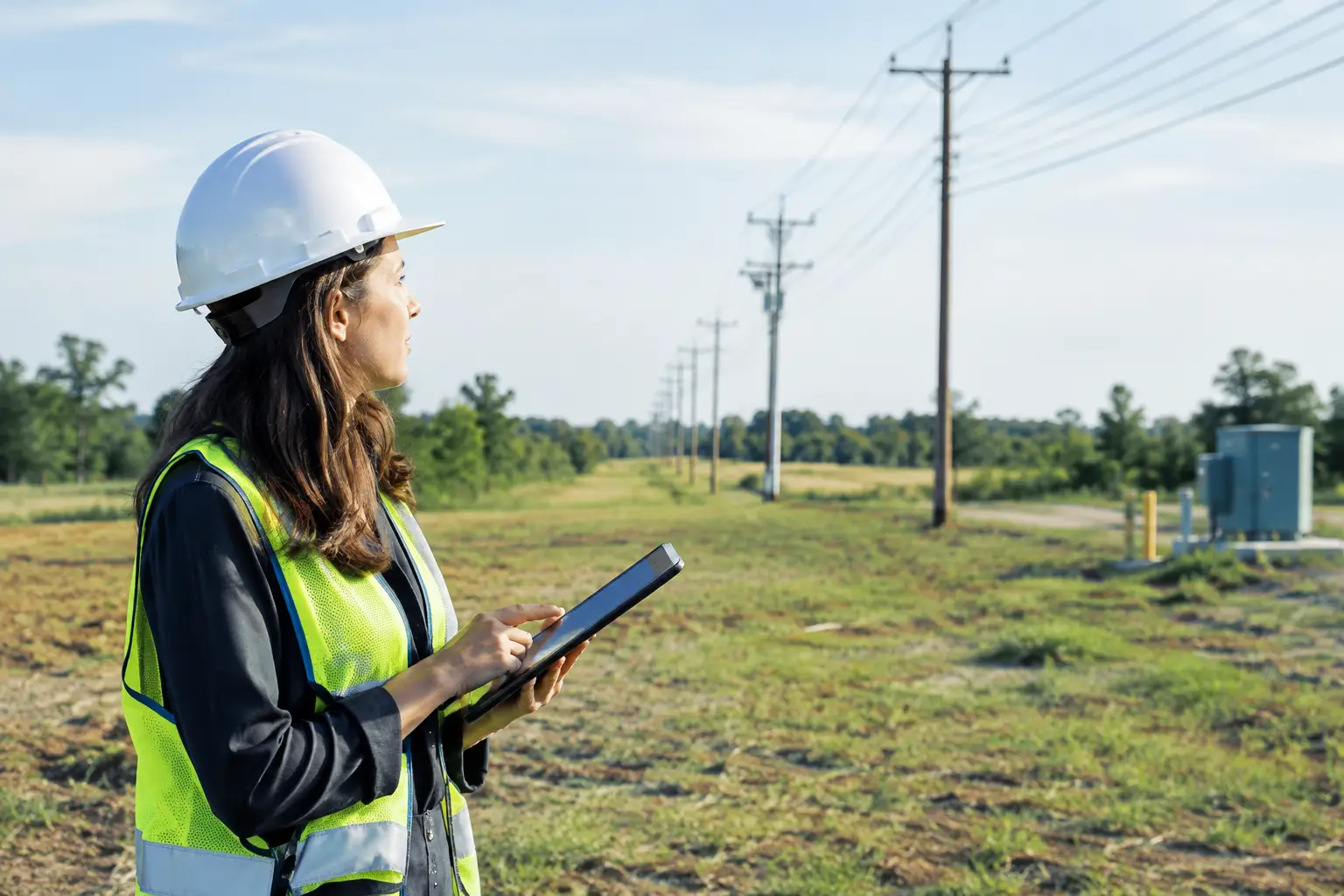
Buyers often see poles along a public road or a neighboring home with lights on and assume electricity is available. That is encouraging, but it is not confirmation. The nearest line may not have enough capacity for a new connection, may be on the wrong side of a ravine or road, or may require easements across other land before a connection can be built.
Water works the same way. A seller may accurately say there is water in the area, yet the parcel may not have a registered connection, the local system may have seasonal pressure limitations, or a future home may need storage tanks and pumping equipment. In rural Panama, “available” can mean anything from an existing metered connection to a potential project that still needs engineering, permission, and money.
Treat every claim as the start of verification, not the end of it. This is not distrust for its own sake. It is how international buyers avoid underwriting a coastal home, rental villa, or small hospitality project based on assumptions that cannot be built into the site plan.
Utility availability checks for electricity
Electricity is usually the first service buyers ask about because it affects construction, air conditioning, refrigeration, internet equipment, water pumps, and rental usability. In much of the Azuero Peninsula, the local power distributor is the appropriate source for connection requirements, but a field review still matters.
Confirm the existing infrastructure
Start by identifying the closest poles, transformer, and service connections. Ask whether the property already has a meter, whether the account is active, and whether that meter serves the parcel being offered. A meter at a caretaker’s structure or an adjoining lot is not the same as a connection allocated to your future building site.
Then establish the approximate distance from the existing network to the proposed house location. A property can have frontage on a road with power while its best building pad sits hundreds of meters uphill, behind a creek, or deep within a large parcel. That distance can affect both cost and feasibility.
A qualified electrician or engineer can help assess the site, but the utility provider must ultimately confirm what it will require. Depending on the situation, that may involve poles, a transformer contribution, a service upgrade, or a formal extension process. Get any available estimate or requirements in writing, understanding that a preliminary estimate is not a fixed construction contract.
Match capacity to the intended use
A modest off-grid cabin has different needs from a three-bedroom vacation rental with mini-splits, a pool pump, and laundry equipment. A larger residence, restaurant, or eco-lodge may require three-phase power or a higher-capacity service that is not practical at a remote location.
This is where buyers should be honest about their use case. Solar with batteries can be an excellent choice for resilience or for a low-load home, especially where grid extension is expensive. It should not be treated as a vague substitute for a proper load calculation. Ask an installer to size the system around actual appliances, pumping needs, backup expectations, and future expansion.
Water: source, rights, storage, and dry-season reality
Water deserves at least as much scrutiny as electricity. The Azuero dry season is real, and a green view during the rainy months does not answer whether a water source will support daily use when demand is highest.
A parcel may be served by a public or community system, have a private well, rely on delivered water, or use a combination of sources and storage. Each option can work. Each also creates a different set of questions.
For an existing connection, verify the meter, account status, and whether the connection can be transferred. Ask local users about pressure, interruptions, and dry-season reliability. For a community-managed system, understand who operates it, how new connections are approved, and whether usage restrictions apply. A conversation with nearby homeowners is often more revealing than a broad statement that “water is good here.”
If the plan is to drill a well, do not assume that neighboring wells guarantee the same result on your parcel. Depth, geology, access for drilling equipment, water quality, permitting, and pumping costs all matter. A well contractor can offer local context, but the buyer should budget for investigation rather than treating water as guaranteed.
Storage is often part of a sensible coastal water plan even where service is reliable. Tanks can provide practical backup during maintenance, outages, or short interruptions. The right capacity depends on occupancy, landscaping, rental turnover, and whether the property includes a pool or irrigation.
Do not overlook wastewater, drainage, and internet
A property without municipal sewer service is common in coastal and rural Azuero. That does not make it unsuitable for building, but it means the septic system must be planned around soil conditions, slope, groundwater, setbacks, and the size of the intended home. A rough site visit cannot replace a design that is appropriate for the lot.
Drainage deserves equal attention. Heavy rain can expose problems that are invisible in the dry season: runoff crossing the building pad, undersized culverts, erosion on a driveway, or water flowing from higher neighboring land. Ask to see the parcel in rain if possible, or at least inspect the terrain for channels, washouts, retaining work, and drainage paths. The cost of creating a stable access road can exceed what a buyer expects from photos.
Internet availability is also location-specific. Mobile coverage, fixed wireless, satellite service, and local providers may all be relevant, but performance varies by topography and service address. Remote professionals and rental operators should test the actual site rather than relying on coverage maps or a signal observed from a nearby road. If dependable video calls or smart-home monitoring are central to your plan, build redundancy into the budget.
Verify access before pricing the utility work
Utilities need a route. That makes legal and physical access part of every utility conversation. If a power line, water pipe, drilling rig, or service vehicle must cross land outside the parcel, confirm whether there is a recorded right-of-way and whether its width and condition support the work.
An informal neighbor agreement can be helpful, but it is not the same as an easement that appears in the property documentation. This distinction becomes critical when a project requires excavation, poles, trenching, or future maintenance. It also affects resale: the next buyer will ask the same questions.
On larger properties, have the survey and site plan identify where a home, utility corridor, septic area, water storage, and driveway can reasonably sit together. The most attractive view point may not be the most practical or economical place to build.
A practical verification sequence before making an offer
The strongest approach is to coordinate utility questions with title, survey, access, and land-use due diligence. Start with the seller’s documents and representations, then inspect the site with someone who understands the area. After that, contact the relevant providers or local administrators with the parcel location and your intended use.
Keep a written file of what has been confirmed, who confirmed it, and what remains an estimate. For a property that needs substantial work, use those findings to shape your offer terms, budget, or decision to walk away. There is no prize for buying the cheapest land if the road, power, water, and drainage turn it into the most expensive project.
At Love Your Land Panama, this is the kind of practical site question we encourage buyers to raise early, particularly on land beyond established residential areas. A candid answer may narrow your options, but it also directs your capital toward a parcel that can support the life or investment you actually intend to create.
The Azuero coast rewards patience. Before you fall in love with the view, stand where the house would go, trace the route for the driveway and utilities, and ask what has been verified rather than what is merely nearby.